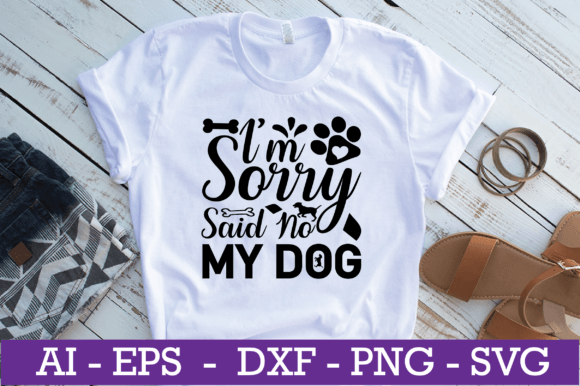
I M Sorry My Dog Said No SVG Design Review
As a designer who regularly tests digital files before they reach my embroidery hoop or cutting mat, I appreciate designs that bring real personality into a project. The I M Sorry My Dog Said No SVG Design is a playful, conversational piece that feels immediately at home in a craft business or a handmade gift lineup. It leans into humor that dog owners instantly recognize, and that relatability is what makes it work for products meant to connect on a personal level. This design belongs to the Crafts category as a Graphics asset, and its strength comes from how directly it speaks to its audience.
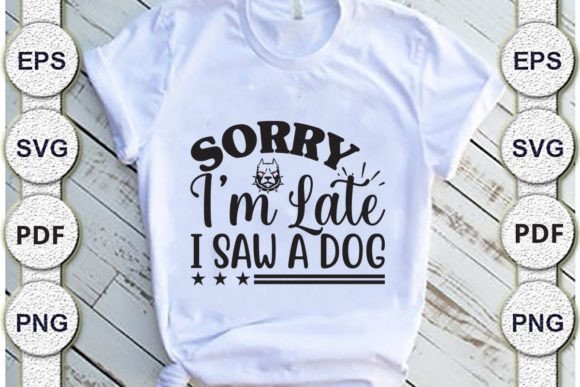
The layout is clean and straightforward. The lettering is bold and readable, and the composition revolves around a phrase that lands like a punchline. There is no clutter or excessive ornamentation, and that is a real advantage. Whether you are preparing an embroidery file for a custom tote bag or setting up a vinyl cut for a sweatshirt, a design that communicates without noise is always easier to work with. This design feels intentional, and that gives it a natural place in both casual projects and gift-oriented merchandise.
First Impressions and Mood
The mood here is lighthearted and self-aware. This is the kind of phrase you would see on a tote bag at a farmers market, a sweatshirt at a dog park, or a gift tag for a fellow pet parent. The design does not try to be refined, and it does not need to be. It knows its audience. For an embroiderer or a small shop owner, that clarity is valuable because it makes positioning the design in a product listing or a mockup easy. The joke lands immediately, and that translates into customer engagement.
A Real Project: Embroidered Tote Bag
I recently prepared a custom embroidered tote bag using this design as the centerpiece. The bag was a sturdy cotton canvas, and I wanted the lettering to pop without overwhelming the bag itself. Because the design is an SVG file, I imported it into my embroidery software to create a stitch file. The bold lettering worked well with a satin stitch for the main text. I used a medium-weight cutaway stabilizer to keep the fabric from puckering and tested the design on scrap fabric first. That test run saved me from a minor thread tension issue on the first letter.
The design performed well in the hoop. The spacing between letters was generous enough that the satin stitch did not crowd itself, and the overall shape fit comfortably in a 5x7 hoop. If you are working with a smaller hoop, you may need to scale the design down, but be careful with lettering that gets too thin. The original proportions held up nicely at around 4 inches wide for the full phrase. At that size, readability was strong and stitch density felt balanced.
Performance on Apparel and Other Surfaces
For those considering this design for custom apparel, test it on a sweatshirt or t-shirt before committing to a full run. The bold lettering works well on fleece and cotton knits, but you need a stabilizer that handles stretch. A tear-away stabilizer with a light fusible backing helped keep the fabric stable during stitching. I also recommend testing the design in a single thread color first. The design reads very well in a solid color, which simplifies production for small batch orders and keeps your embroidery project costs predictable.
Where should you use this design carefully? Small hoop sizes are the first consideration. With a 4x4 hoop, the design needs significant scaling, and finer details in the lettering may become harder to read. Be cautious on textured fabrics like heavy fleece or thick wool blends, where the stitch may not sit cleanly on the surface. On dark fabric, choose a thread color with strong contrast. Light gray or white thread on dark navy or black keeps the design visible and crisp.
Curved Surfaces and Delicate Fabrics
Curved surfaces like caps or baby clothing require extra attention. The design is a single line of text, which makes placement easier than a complex graphic, but you will want to test curve compensation in your software. On a cap, the design may need slight adjustment to sit evenly across the front panel. On a baby bodysuit, the fabric is lightweight and stretchy, so a lightweight stabilizer and careful hoop setup are important to avoid distortion. For baby embroidery projects, I recommend testing on a similar fabric first to confirm the stitch quality.
Product Value and Customer Connection
From a product value perspective, this design adds a strong emotional hook. Dog owners love products that reflect their relationship with their pets. This design captures a specific moment of apology and blame-shifting that is instantly recognizable. When you sell a finished product featuring this design, you are selling a feeling as much as a physical item. That is what makes it work for Etsy listings, craft fair tables, and small shop merchandise. It is giftable, shareable, and easy to photograph for product listings and printable mockups.
For those running a craft business, this design fits well into a lineup of pet-themed products. You could offer it on tote bags, drawstring bags, cosmetic pouches, throw pillows, kitchen towels, or framed hoop art. It also works as an embroidered patch. If you digitize it with a satin stitch border, you can sew it onto jackets, backpacks, or dog leashes. That opens up more product options without requiring a new file each time. The SVG format also makes it easy to create mockups for your online shop, which is a huge time saver for Etsy sellers and small shop product listings.
Practical Designer Notes for Embroidery
Here are a few notes based on my experience working with this design.
- Test on scrap fabric. Always test the design on scrap fabric before stitching your final product. This applies to beginners and experienced embroiderers alike. A quick test run can reveal tension issues, density problems, or contrast concerns before they affect your finished piece.
- Check thread color contrast. A design that looks great in a digital mockup may not have the same punch on a busy or dark fabric. Hold your thread colors against the fabric in natural light before loading the machine.
- Review stitch density. Once you convert the SVG into an embroidery file, check the stitch density. If the density is too high, the fabric may pucker. If it is too low, the design may look thin. Adjust based on your fabric choice and the type of stitch you plan to use, whether that is a satin stitch, fill stitch, or running stitch.
- Confirm hoop size. The design fits well in a 5x7 hoop at its original scale. For smaller hoops, plan accordingly and verify that the lettering remains readable after scaling.
- Understand licensing. Confirm the licensing terms before selling finished products or digital files. The download includes one AI file and one SVG file, giving you flexibility in software. Import the SVG into your embroidery software or use the AI file for further editing. Make sure you understand what the license allows for commercial embroidery and digital product sales.
Mockups, Listings, and Brand Consistency
For those creating printable mockups, this design is easy to work with. The clean vector format means you can place it on product photos or blank templates without worrying about pixelation. That is a nice advantage when designing your Etsy listings or social media previews. A strong mockup can make the difference between a customer scrolling past and clicking through to your shop. The design also helps with brand consistency if you are building a product line around pet humor or personalized gifts.
In terms of visual appeal, the design is simple but effective. It does not rely on intricate flourishes or complex shapes. It communicates clearly and quickly. That directness works well in a crowded marketplace where customers are scanning quickly. If you are building a brand around pet humor or personalized gifts, this design fits naturally into that aesthetic without requiring additional decoration.
Stabilizer and Fabric Notes
For most projects with this design, a medium-weight cutaway stabilizer is a reliable choice. If you are stitching on stretchy fabric, add a fusible backing to prevent distortion. For lightweight fabrics like cotton lawn or jersey knit, use a tear-away stabilizer and reduce the stitch density slightly. These adjustments help the design maintain its shape after washing and keep your handmade product looking professional over time.
Final Thoughts on the Design
Overall, the I M Sorry My Dog Said No SVG Design is a solid choice for embroiderers, crafters, and small business owners who want a design that connects with dog owners. It is easy to work with, adaptable to different products, and has a clear emotional hook that makes it giftable and marketable. Test it on your fabric, check your hoop size, use a good stabilizer, and confirm your licensing, and you will have a finished product that customers reach for and remember.