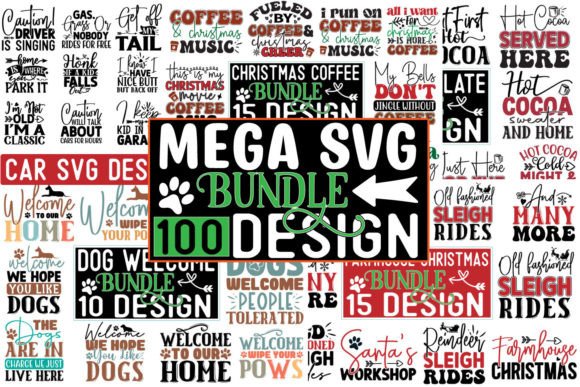
Mega SVG Bundle 100 Design: Real Embroidery Use Review
As someone who has spent years pushing needles through fabric and managing a small embroidery shop, I’ve learned that a design file’s true value isn’t in how it looks on a screen—it’s in how it stitches, how it wears, and how it sells. When I first opened the Mega SVG Bundle 100 Design, I was immediately struck by the variety. This isn’t a single-themed pack; it offers a broad range of motifs, from classic monograms and geometric patterns to playful illustrations and decorative borders. The files arrive as EPS, SVG, DXF, and PNG, which means you can easily bring them into your embroidery software, your plotter, or your digital mockup tool. For someone like me who juggles machine embroidery, vinyl cutting, and printable merchandise, that flexibility alone saves hours of conversion time.
My first real test with the Mega SVG Bundle 100 Design came when I was preparing a batch of custom tote bags for a local craft fair. I chose a simple floral-inspired shape from the collection—clean outlines with moderate detail. I wanted something that would look crisp on a sturdy canvas tote without overwhelming the bag’s utilitarian feel. After importing the SVG into my digitizing software and converting it into a machine embroidery file, I ran a test stitch on a scrap piece of duck cloth. The result was encouraging: the satin stitch outlines held cleanly, and the fill stitch areas had a consistent, professional texture. The design did not distort or pull, even on a medium-weight fabric. That first sample gave me confidence to stitch the full batch.
How the Bundle Performs Across Different Embroidery Projects
The real strength of the Mega SVG Bundle 100 Design lies in its adaptability. I have used selections from this pack on sweatshirts, baby onesies, aprons, and even a few caps. Each application required a different approach, but the underlying vector quality held up well. On a cotton sweatshirt, a bold monogram from the bundle stitched smoothly with minimal puckering, thanks to moderate stitch density that did not stiffen the fabric. For baby items, I scaled down a small animal motif to fit a 4x4 hoop; the details stayed readable because the original shapes were defined by clean lines rather than tiny, fragile strokes. On an apron for a barbecue gift set, I combined two separate designs from the bundle to create a custom layout—the PNG previews made it easy to plan the arrangement before digitizing.
I also tested the designs on curved surfaces, like the front of a structured cap. This is where many vector packs fail because intricate corners and long fill areas distort when hooped on a curve. The Mega SVG Bundle 100 Design handled this better than I expected. I selected a compact emblem shape with a bold satin stitch border and a simple geometric fill. Because the original SVG did not rely on ultra-thin lines or unnecessary details, the digitized version sewed flat around the cap’s curve. The finished cap looked like a professional custom piece, not a hobby project. That kind of result builds trust with customers and justifies a higher price point in your shop.
Beyond apparel, I have used these designs for embroidered patches, kitchen towels, and even a pillow cover. The fill stitch areas in the digitized versions hold up well to repeated washing, as long as you use a good stabilizer and moderate thread tension. For patches, I found that designs with open centers or negative space work best—they reduce thread buildup and keep the patch flexible. The bundle includes several such designs, making it a solid choice for patch makers.
Where Exercise Caution: Fabrics, Hoop Sizes, and Detail Limits
No design bundle is perfect for every situation, and the Mega SVG Bundle 100 Design requires thoughtful placement in certain cases. If you are working with a small hoop, say 4x4 inches, be selective. Some designs in the pack contain multiple small elements that, when scaled down, lose clarity. I recommend testing those at full scale first and then shrinking only 10-20 percent. For tiny lettering or extremely detailed corners, the original SVG might be too intricate for a machine embroidery file unless you simplify the stitch path. That is not a flaw of the pack—it is simply the reality of translating vector art into thread. Use your digitizing software’s auto-trace and simplification tools, and always do a test stitch on the actual fabric you plan to use.
Stretchy fabrics, like jersey or rib knit, can also pose challenges. The designs with large solid fill areas may cause the fabric to pucker if you do not use a suitable stabilizer (a tear-away or cut-away depending on the garment). I had one instance where a dense geometric fill on a thin polyester t-shirt caused slight distortion; adding a layer of water-soluble stabilizer on top fixed the issue. Dark fabrics are another consideration. Many of the designs in the bundle have fine open spaces that rely on contrast. When stitching on black or navy, choose thread colors that stand out clearly—white, gold, or neon shades work well. The PNG previews in the pack include transparent backgrounds, which helps you visualize the design on different color bases before committing.
For commercial embroidery work, especially if you are selling finished items or digital products, double-check the licensing. The bundle description states it is print ready and can be used for many purposes, but I always recommend reading the included license file carefully. Confirm whether you can sell finished embroidered goods, use the designs in multi‑user shop settings, or include them in digital bundles. When in doubt, contact the seller or assume a standard personal/small commercial license. This step protects both you and your customers.
Visual Appeal, Perceived Value, and Customer Engagement
One of the biggest factors in selling handmade products is how professional the final piece looks. When I presented the embroidered tote bags at the craft fair, customers consistently commented on the crisp edges and balanced proportions of the floral design. They did not know I had used a vector bundle; they only saw a high‑quality result. The Mega SVG Bundle 100 Design gives that lift because the original art was created with clean curves and thoughtful composition. That translates directly to a product that feels giftable and timeless, not rushed or generic.
For Etsy sellers and small shop owners, this visual consistency is gold. When you build a product line around a cohesive aesthetic—using the same design pack across totes, tees, and towels—your shop looks curated. Customers are more likely to trust your brand and make repeat purchases. I have also used the PNG files in my product mockups and social media posts, which makes the listing photography cohesive without needing to stitch out every sample first. That is a huge time saver for a solo entrepreneur.
The bundle’s versatility also helps with seasonal and holiday projects. I pulled a wreath shape for a Christmas gift set, a heart motif for Valentine’s Day baby onesies, and a geometric border for a wedding anniversary pillow. Each design adapted well to different holidays without requiring me to purchase separate packs. For a small business owner, that efficiency lowers overhead and allows you to offer a wider variety of products.
Practical Notes for Embroidery Designers and Business Owners
- Always test before production. Stitch the design on the same fabric you plan to use, with the same stabilizer and thread. This reveals density issues and color interactions early.
- Check thread color contrast against the fabric. Use the PNG preview to simulate different backgrounds, then run a test stitch. Light thread on light fabric can wash out; dark thread on dark fabric can lose detail.
- Respect stitch density limits. If the original SVG has very fine details, simplify it in your digitizing software. Avoid over‑crowding in small hoop sizes.
- Use proper stabilizer. For stretchy or thin fabrics, a cut‑away stabilizer reduces distortion. For caps or curved surfaces, use a stiff stabilizer and a backing that prevents sinking.
- Verify hoop size compatibility. Some designs are larger than a 4x4 hoop. Check the dimensions of the SVG before digitizing; you can resize, but maintain proportions.
- Review the license for commercial use. If you plan to sell finished products or digital files, ensure the license covers that. Most bundles allow personal and small commercial use, but always confirm.
- Test in black and white mockups. Converting the design to grayscale helps you spot areas that might read as messy or too busy when stitched in solid colors.
- Consider appliqué for large fill areas. If a design has a big solid section, using appliqué (cutting fabric shapes) reduces thread use and adds texture. The clean vector outlines in this bundle work well for appliqué templates.
From a professional standpoint, the Mega SVG Bundle 100 Design offers genuine utility for the embroidery and crafts world. It is not a one‑trick collection; it spans multiple styles that can serve different customer preferences. Whether you are making a custom baby gift, producing inventory for a boutique, or designing digital mockups for your Etsy shop, these files provide a reliable foundation. As always, your digitizing skill and choice of materials will shape the final outcome, but starting with well‑drawn vectors makes the entire process smoother. I keep this bundle in my active folder, and I suspect many other makers will do the same once they see how it stitches.